Clara Krause · 10 October 2026
Tracing Fraud Claims in Salmon Exports to Shifts in Highland Community Monitoring Efforts
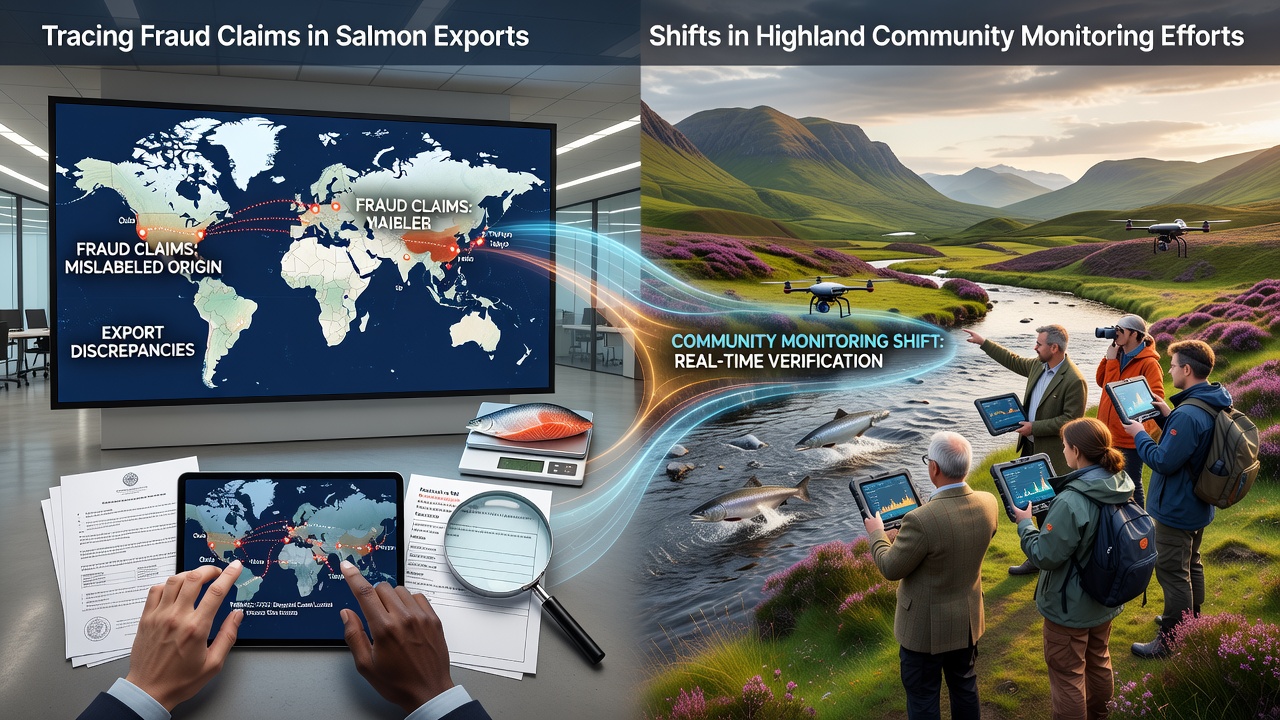
Export records for Scottish salmon have drawn increased scrutiny in recent years as discrepancies in labeling, origin documentation, and volume declarations surfaced across multiple markets, and these issues have prompted Highland communities to adjust their local oversight practices accordingly. Data compiled by Marine Scotland shows that between 2022 and 2025 export volumes reported to certain EU destinations exceeded verified production figures from specific farms by margins that triggered verification requests from buyers, while similar mismatches appeared in shipments destined for Asian processing hubs. Observers note that such patterns often stem from paperwork errors, misattributed stock sources, or intentional mislabeling designed to bypass regional quotas or quality standards.
Tracing Mechanisms and Documentation Reviews
Authorities and industry groups have adopted layered verification approaches that combine blockchain-based chain-of-custody platforms with traditional isotope analysis of fish tissue samples, and these tools allow regulators to cross-check declared harvest locations against actual geographic markers in the product. In practice, a shipment flagged in October 2025 for inconsistent paperwork underwent DNA testing that revealed the salmon originated from a different river system than stated on the export certificate, leading to a full consignment recall and subsequent fine. Community groups in the Highlands began receiving anonymized alerts from these tracing systems around the same period, which enabled residents to correlate export anomalies with observed changes in local river conditions and farm discharge patterns.
Community Monitoring Adaptations in the Highlands
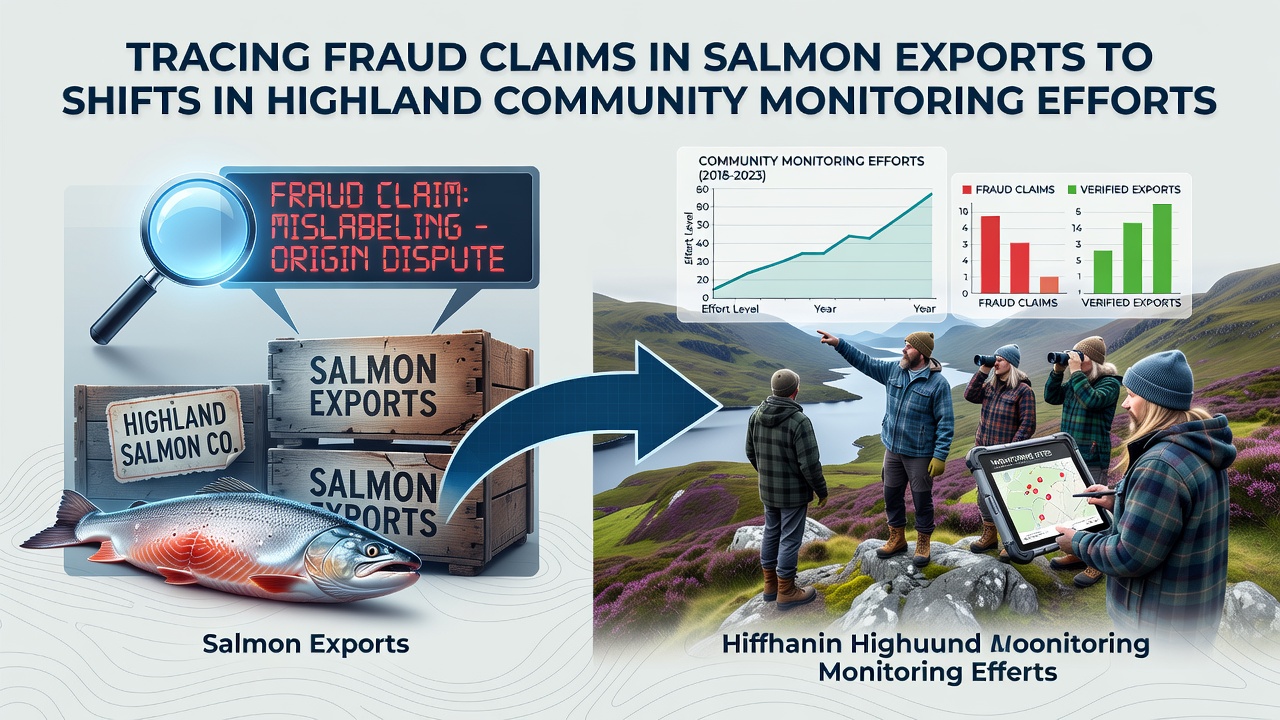
Residents in areas surrounding major aquaculture operations have expanded citizen science programs that now include regular water sampling, drone surveys of net pens, and photographic documentation of transport vehicles leaving processing facilities, while coordination with regional fisheries boards has increased the frequency of joint inspections. Figures released by the Scottish Government indicate that volunteer monitoring hours in Highland river catchments rose by 38 percent from 2023 to 2025, driven partly by training workshops organized through local development trusts and partly by public access to export discrepancy reports published online. These efforts focus on early detection of unauthorized stock movements rather than enforcement, which remains the responsibility of statutory agencies.
Integration of Export Data with Local Observations
Highland monitoring networks have begun cross-referencing publicly available export statistics with field notes collected by volunteers, and this integration has highlighted correlations between sudden spikes in declared shipments and periods of elevated river sediment levels downstream from certain farms. A 2024 pilot project coordinated by the University of the Highlands and Islands demonstrated that communities using standardized data templates could flag potential irregularities within 48 hours of an export declaration appearing in customs databases, allowing fisheries officers to prioritize site visits. Such collaboration relies on open data portals maintained by government bodies and does not replace formal audits conducted by bodies such as the Scottish Environment Protection Agency.
Regulatory and Industry Responses
Industry associations representing Scottish salmon producers have introduced voluntary certification schemes that require third-party verification of harvest volumes before export paperwork is finalized, while importers in key markets including Norway and Canada have tightened pre-shipment inspection requirements. Research published by the Institute of Marine Research in Norway indicates that enhanced traceability reduces the incidence of origin fraud by up to 27 percent when implemented across entire supply chains, and several Highland processing plants adopted elements of these systems during 2025. Regulatory updates scheduled for discussion in October 2026 aim to standardize electronic export declarations across the UK and EU, which would further support community-level monitoring by making volume data available in near real time.
Geographic and Economic Context
Salmon farming remains a significant employer in the Highlands, with production concentrated along the west coast and Western Isles, and export revenues contribute substantially to regional economies according to statistics compiled by Highlands and Islands Enterprise. Fraud claims, when substantiated, can affect market access and farm viability, prompting communities to seek greater transparency as a means of protecting both environmental quality and local jobs. Monitoring activities now incorporate training on recognizing altered documentation and reporting anomalies through established channels rather than direct confrontation with operators.
Conclusion
Shifts in Highland community monitoring have developed directly from the need to address documented discrepancies in salmon export records, resulting in expanded volunteer programs, improved data sharing with regulators, and closer alignment between field observations and official statistics. These developments continue to evolve alongside regulatory proposals expected in late 2026 and international traceability standards adopted by trading partners.