Ulrich Simmons · 24 October 2026
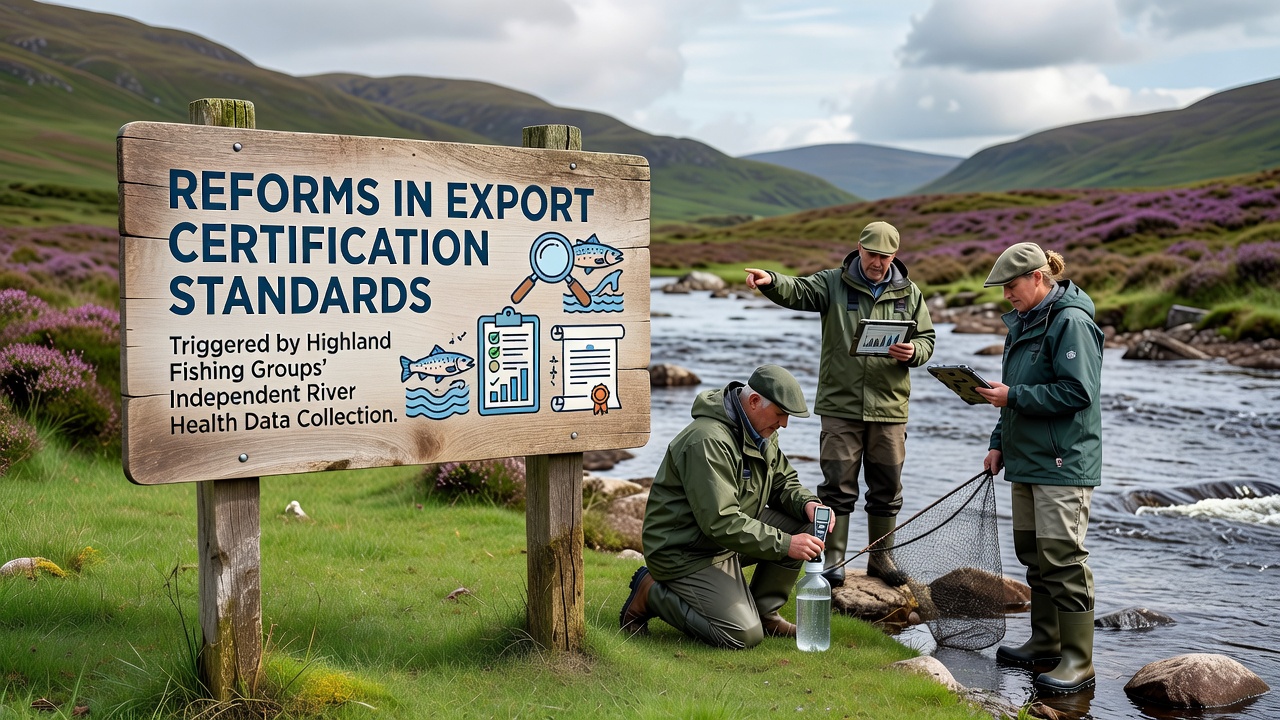
Reforms in Export Certification Standards Triggered by Highland Fishing Groups' Independent River Health Data Collection
Highland fishing groups began independent river health monitoring programs several years ago, and their datasets on water quality, sediment levels, and biodiversity indicators have now prompted shifts in export certification standards for Scottish aquaculture products, while authorities integrate these findings into regulatory frameworks that govern international trade, and observers note the changes align with broader efforts to verify environmental compliance before goods reach global markets.
Data Collection Efforts in the Highlands
Groups operating along rivers in regions such as Inverness-shire and Ross-shire deployed monitoring equipment and conducted regular sampling rounds, which produced records showing correlations between upstream aquaculture activities and downstream changes in nutrient concentrations along with macroinvertebrate populations, and these findings reached regulatory bodies through formal submissions that included time-stamped measurements and photographic evidence, while similar initiatives in other parts of the UK drew from comparable methods yet focused on different catchment areas.
One collective based near the River Ness compiled multi-year datasets that highlighted seasonal spikes in certain parameters following feed application periods at nearby farms, and these records underwent peer review by independent scientists before wider circulation, whereas another team in Sutherland emphasized temperature and dissolved oxygen readings that reflected variations potentially linked to waste discharge patterns.
Pathway to Certification Reforms
Export certification processes previously relied on operator-submitted compliance reports and periodic government inspections, but the influx of community-collected data introduced additional verification layers that now require third-party audits incorporating external river health metrics before certificates are issued for shipments to markets in the EU and beyond, and this adjustment took effect progressively through 2025 with full implementation scheduled for October 2026 when new documentation standards become mandatory for all qualifying exporters.
Authorities adjusted protocols to include cross-referencing with publicly available monitoring repositories, which means certification bodies must now confirm that site-specific environmental data aligns with thresholds established through aggregated community inputs, and this approach draws parallels to systems used by the Department of Fisheries and Oceans Canada where stakeholder monitoring contributes to certification criteria for seafood exports.
International Trade Implications
Buyers in Asia and North America have started requesting supplementary attestations that reference these updated standards, which in turn affects contract negotiations and pricing structures for Scottish salmon and trout products, while exporters adapt by investing in enhanced on-site monitoring technology to meet the combined requirements of both domestic regulators and overseas importers. Research from the Commonwealth Scientific and Industrial Research Organisation in Australia illustrates how similar data integration methods streamlined certification for other aquaculture nations facing comparable scrutiny.
Figures from trade statistics reveal a temporary dip in export volumes during the transition period as facilities aligned their operations with the revised benchmarks, and yet volumes recovered once compliance documentation processes stabilized, whereas analysts tracking the sector observe that long-term market access improved for those operations demonstrating consistent alignment with the new evidence-based criteria.

Technical Adjustments in Standards
Certification documents now mandate inclusion of river health trend analyses covering at least three consecutive years, and these analyses must incorporate metrics such as benthic community indices and chemical residue profiles that match thresholds derived from the aggregated Highland datasets, while audit teams receive training to interpret community-sourced information alongside traditional compliance records. This integration reduces reliance on single-source reporting and instead promotes a layered verification model that accounts for cumulative environmental pressures across entire catchments.
Producers have responded by forming partnerships with local monitoring collectives to share raw data streams in real time, which facilitates preemptive adjustments to operational practices before certification reviews occur, and such collaborations also support ongoing research into mitigation techniques like improved waste containment systems that directly address parameters flagged in the independent collections.
Conclusion
The incorporation of Highland fishing groups' river health data into export certification standards marks a measurable evolution in how aquaculture operations demonstrate environmental performance prior to international shipment, and the October 2026 deadline provides a clear timeline for full adoption across the sector, while continued data collection ensures the standards remain responsive to emerging conditions in river systems. Trade partners continue to reference these updated requirements when assessing supply chain eligibility, which sustains the flow of verified products to global buyers.